Crypto scalping
Scalping is trading short moves: profit is taken from fractions of a percent and decisions are made in seconds. On this horizon the winner is not the forecast but speed and discipline - how long it takes from idea to order on the exchange, and whether the risk was calculated before the entry rather than after.
How scalping differs from regular trading
A position trader holds a trade for days and can afford to size it by hand. A scalper makes dozens of trades per session, and every minute of thinking is a missed entry or an extra loss.
Hence three requirements for the workspace: see where the real volume sits; open a trade in one action with the risk already calculated; do not babysit positions by hand, because babysitting ten positions by hand is impossible.
- Trade horizon - from seconds to hours
- Goal - a fraction-of-a-percent move, taken many times
- Fees and slippage eat results faster than forecasting mistakes
- What decides is not entry precision but stop size and sticking to it
What a scalper reads: order book, tape and clusters
The exchange order book shows limit orders on both sides of the price. A large wall is a level price more often bounces from than cuts through; a wall that disappears is a reason to doubt your idea.
The trade tape shows executed trades: buyer or seller aggression. Cluster analysis of a candle shows at which prices inside it most of the volume traded - that is where the levels the market remembers are.
All three tools are in the NMNH.TRADE terminal in one window: no switching between tabs and losing the entry.
Risk on a short trade
The main beginner mistake in scalping is measuring risk in leverage instead of money. 50x on its own says nothing: what matters is how much you lose if price reaches the stop.
The right order is the reverse: first choose the stop from the chart, then set the allowed loss as a percent of the deposit, and only from these two numbers calculate the position size. The terminal does this for you, accounting for the coin's lot step, leverage cap and exchange fee; you can also estimate it in the position calculator - it is open without registration.
Managing the trade while you watch the next one
On a short horizon the stop has to move to breakeven exactly when the first target is hit - a minute later it is a different trade. By hand you will not keep up if several positions are open at once.
In NMNH.TRADE the server does the management: targets and stop sit on the exchange, a target is hit - the stop moves by itself, the stop is hit - the remaining orders are cancelled. Your tab can be closed meanwhile.
Honestly about the risks
Scalping leveraged futures is the fastest way to lose a deposit that the crypto market offers. Frequent trades mean frequent fees, and high leverage means a fraction-of-a-percent move away from liquidation.
Neither the terminal, nor risk calculation, nor position management make trading loss-free. They only remove execution mistakes - the ones that come from haste and mental arithmetic. Everything else is up to the trader.
What it looks like on a real trade
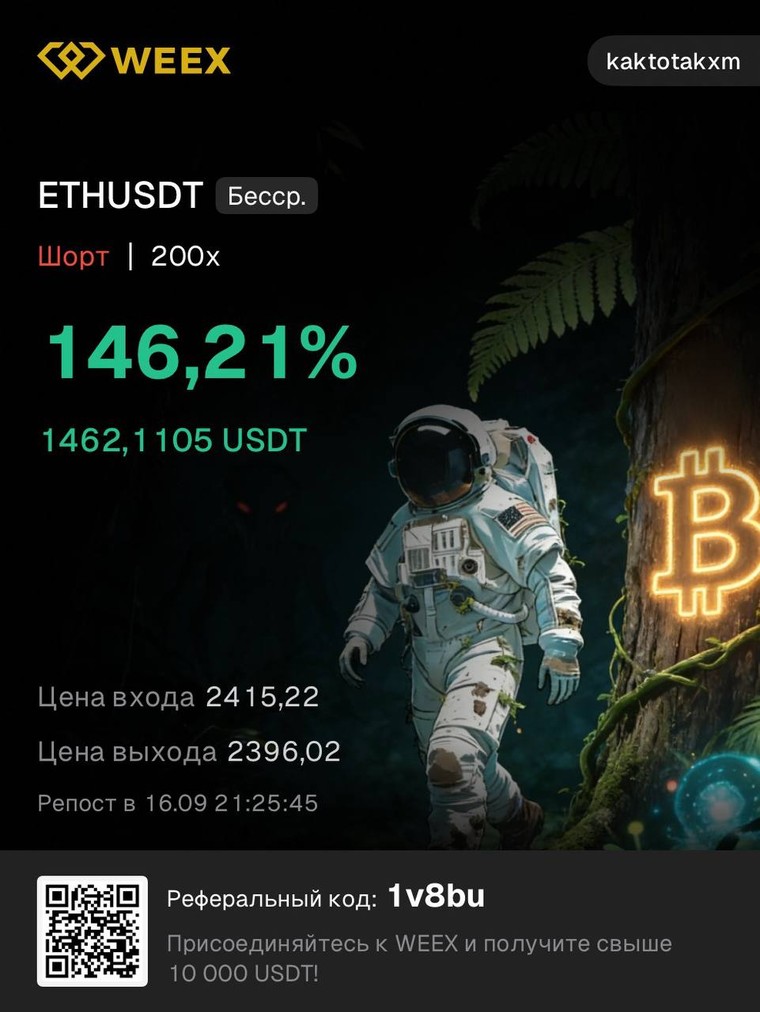
An ETH short on WEEX - screenshots from the terminal: what it showed at the entry, what happened next and how the trade ended.
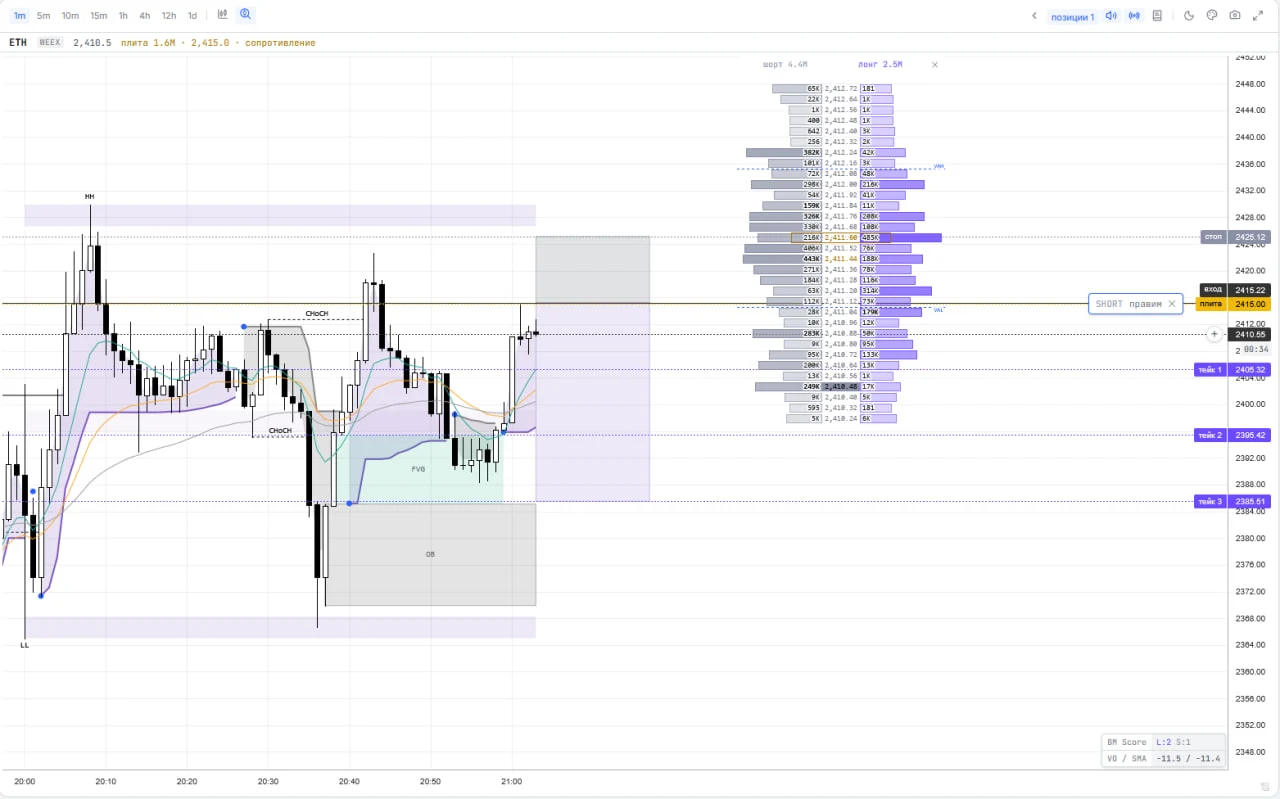
1A wall at resistance
The order book holds 1.6M at 2415 - an order nobody eats through, and the terminal writes it right in the header: "wall 1.6M · 2415.0 · resistance". The markup says the same: structure broken down, price came back to the level. Short from the wall: entry 2415.22, stop 2425.12 behind it, three targets below.
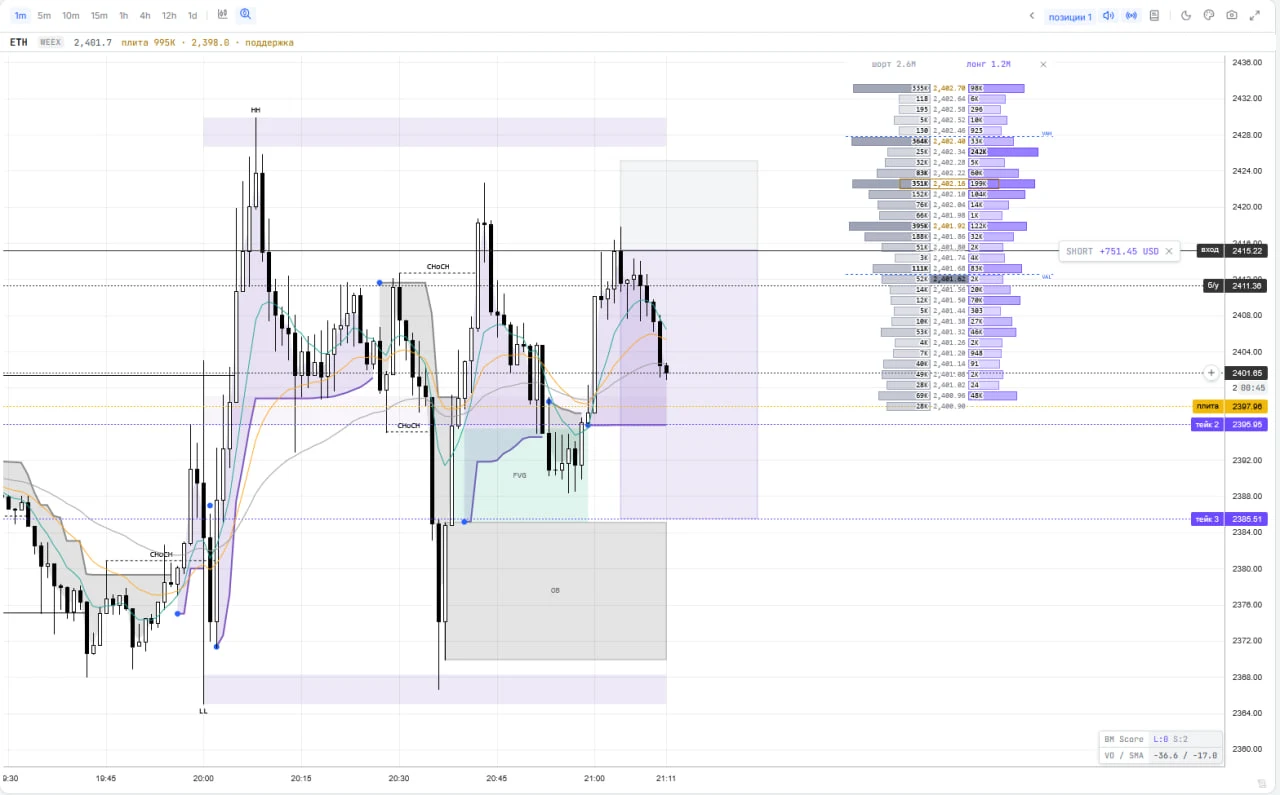
2Stop to breakeven, first target hit
Price went down, the first target was taken, the stop moved to breakeven at 2411.36 - from here the trade cannot end in a loss. The wall is now below price, at 2398: the same order book, but now as support.
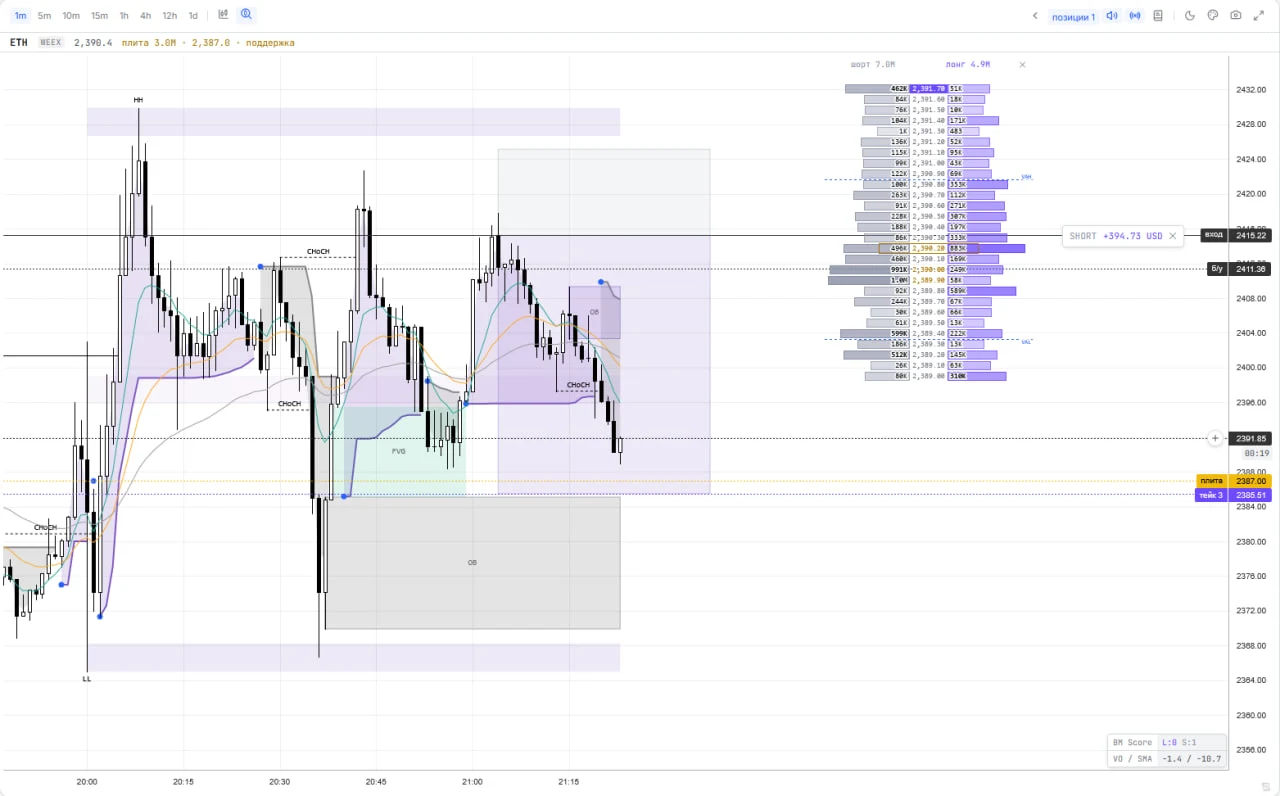
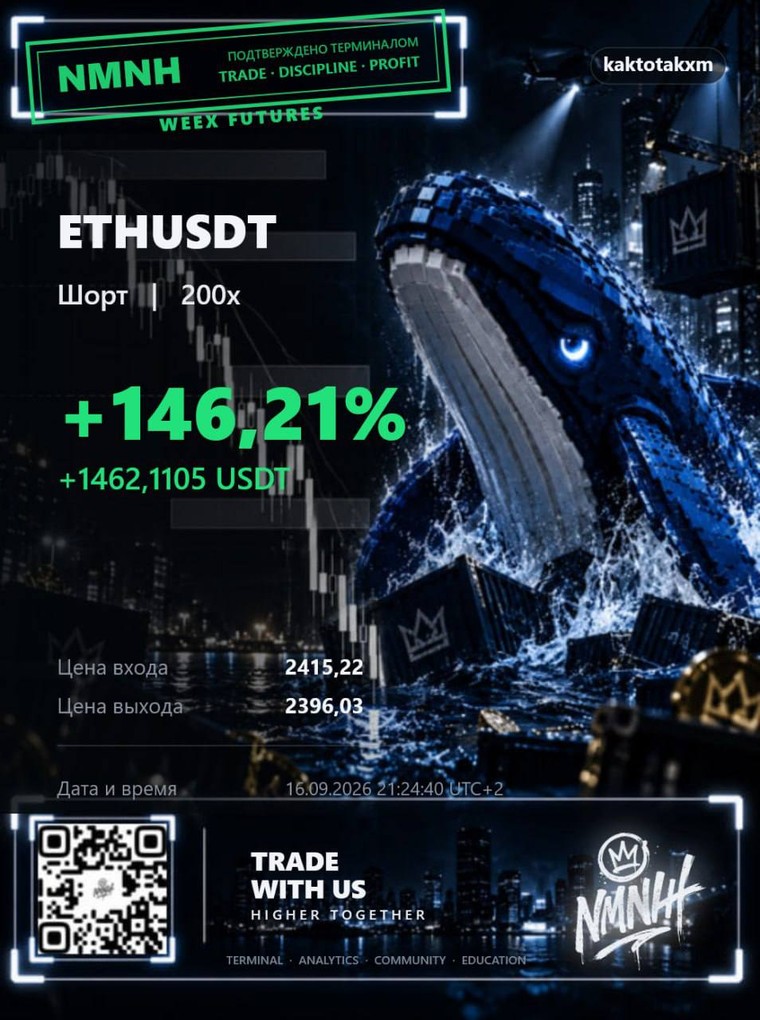
3Exit and journal entry
Exited at 2396.03 without waiting for the third target. The terminal wrote the trade to the journal itself - entry, exit, targets, fee and result - and built the card from that record.
FAQ
Is scalping suitable for beginners?
It is the most demanding trading style: it forgives neither haste nor guessed position sizes. It makes sense to start with a minimal deposit and a predefined risk per trade, and leave size calculation to the terminal or the calculator.
What leverage to use for scalping?
Leverage is a consequence, not a decision. First the stop and the allowed loss in money are set, the size comes from them, and the size defines the leverage needed. The terminal derives it itself and does not let you exceed the exchange limit for the coin.
How much money do I need to start?
The platform has no technical limits - the minimum trade size is set by the exchange and the coin's lot step. It is wiser to start with an amount you can lose calmly.
Can I scalp from a phone?
Opening and managing trades - yes, the terminal works in the browser and in Telegram. But a forty-row order book and cluster analysis are hard to read on a narrow screen, so analysis is more comfortable on a computer.
Try it in the terminal
Order book, clusters and risk calculation in one window. Free access, your money stays in your exchange account.
Get accessCrypto trading carries high risk, especially with high leverage. You can lose your entire deposit. Site materials are for information only and are not individual investment advice.